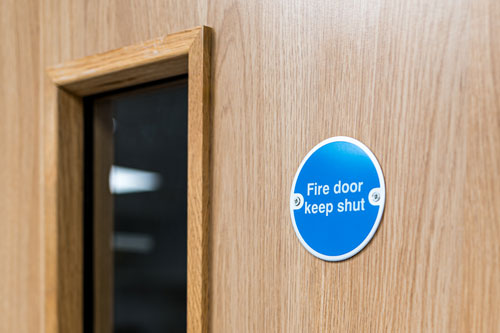
Fire doors are an important part of a building's passive fire protection. Their job is to help restrict the spread of fire and smoke, supporting the building's fire safety strategy and protecting escape routes.
The door leaf is only part of the picture. The frame, hardware, glazing and other components need to work together. A door that looks substantial is not, on its own, evidence that the complete installation is suitable for its location.
What should I do first?
Start with the building's current fire risk assessment and any existing door records. These should help you understand which doors have a fire safety role, what is already known about them and whether actions remain outstanding.
If you manage a workplace and need to review that starting point, the government's fire risk assessment guidance explains the wider process.
Make sure the person arranging checks understands the difference between a routine condition check, a detailed survey and remedial work. Each serves a different purpose.
What about existing doors?
An older door should be assessed in the context of the building and its fire risk assessment. Missing modern certification alone does not establish that an existing flat entrance door must be replaced. The government's fire door guidance for England addresses this distinction.
If the condition or suitability of a door is uncertain, seek competent advice. Do not assume that replacement is always necessary, or that a quick visual check can settle every question.
How often should fire doors be checked?
The schedule depends on the building and the applicable requirements. Our guide to how often fire doors should be inspected in the UK explains England's specific residential checking intervals and why a blanket six-month rule is not suitable for every property.
Whatever the planned schedule, give occupants and site teams a clear route for reporting faults between visits. Reported defects need assessment and follow-up rather than being left until the next appointment.
What makes follow-up effective?
Record findings against a consistent door reference. Keep the location, observations, action owner and completion evidence together, so the next inspection can build on what was found previously.
Where repairs are proposed, ask the contractor to explain the scope and how the completed work will be checked. Keep the relevant records with your building information rather than leaving them in an individual email inbox.
If the concern extends beyond the doors, a passive fire protection survey can help define the next investigation.
Next steps
At Oracle, we help building teams organise surveys, remedials and maintenance around the needs of occupied properties. Explore our fire prevention services or contact our team to discuss your building and the records you already have.