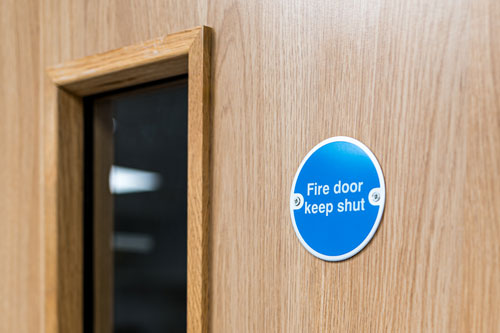
Fire doors need regular checks, but there is no single inspection interval that applies to every building in the UK. The right programme depends on where the building is, how it is used and what its fire risk assessment requires.
That matters if your maintenance schedule simply says "check every six months". For some buildings, specific checks are required more often. For others, the assessment, condition of the doors and day-to-day use should inform the programme.
What are the requirements in England?
For blocks of flats in England whose top storey is more than 11 metres above ground level, the Fire Safety (England) Regulations 2022 require the Responsible Person to:
- Check communal fire doors at least every three months.
- Use best endeavours to check flat entrance fire doors at least every 12 months.
The government's fire door guidance explains these duties. These routine checks are distinct from a detailed assessment of a door's suitability. With appropriate instruction, staff can carry out the basic visual checks; repairs require suitable competence.
Those intervals are specific to the buildings covered by the regulations. They should not be presented as a rule for every office, school or residential building across the UK. Scotland, Wales and Northern Ireland have their own frameworks.
Where should a facilities manager start?
Start with your current fire risk assessment, door records and maintenance instructions. Your programme should tell the team which doors need checking, what type of check is required and who will act on the findings.
If the records are incomplete, agree the gaps with the person responsible for fire safety before setting up a calendar of visits. A recurring appointment is only useful when everyone understands its scope.
For offices and other workplaces, the government's fire risk assessment guidance is a useful starting point for understanding the assessment and review process.
What makes a checking programme work?
Give every door a clear location or asset reference. "Door on floor three" is not much help if there are twelve of them. A consistent reference makes it easier to connect a reported problem, a contractor's visit and the eventual repair record.
Plan access in advance, particularly where a visit involves residents or occupied offices. Make sure there is a simple way for building users to report damage between scheduled visits. Your team should know where those reports go and who reviews them.
Ask the contractor to explain the difference between a routine check, a detailed survey and a remedial visit. That avoids paying for overlapping work or assuming that a brief inspection covers something it does not.
What should you keep on record?
A useful maintenance record brings together the door reference, date, checker, observations, photographs where appropriate and the action taken. Add an owner and follow-up date to each outstanding item.
When a repair is complete, connect the completion evidence to the original finding. This gives the next person reviewing the door a history they can follow, rather than a folder of unrelated photographs.
Do not wait for the next planned visit to raise a reported defect. The person responsible for fire safety should assess its urgency and arrange the appropriate response.
How can Oracle help?
At Oracle, we help building teams turn survey findings into an organised programme of work. Our fire prevention services cover fire doors, passive protection and ongoing maintenance, with delivery planned around occupied buildings.
If you need to understand the condition of the wider building fabric, read what a passive fire protection survey includes. To discuss your existing records and inspection programme, get in touch with our team.