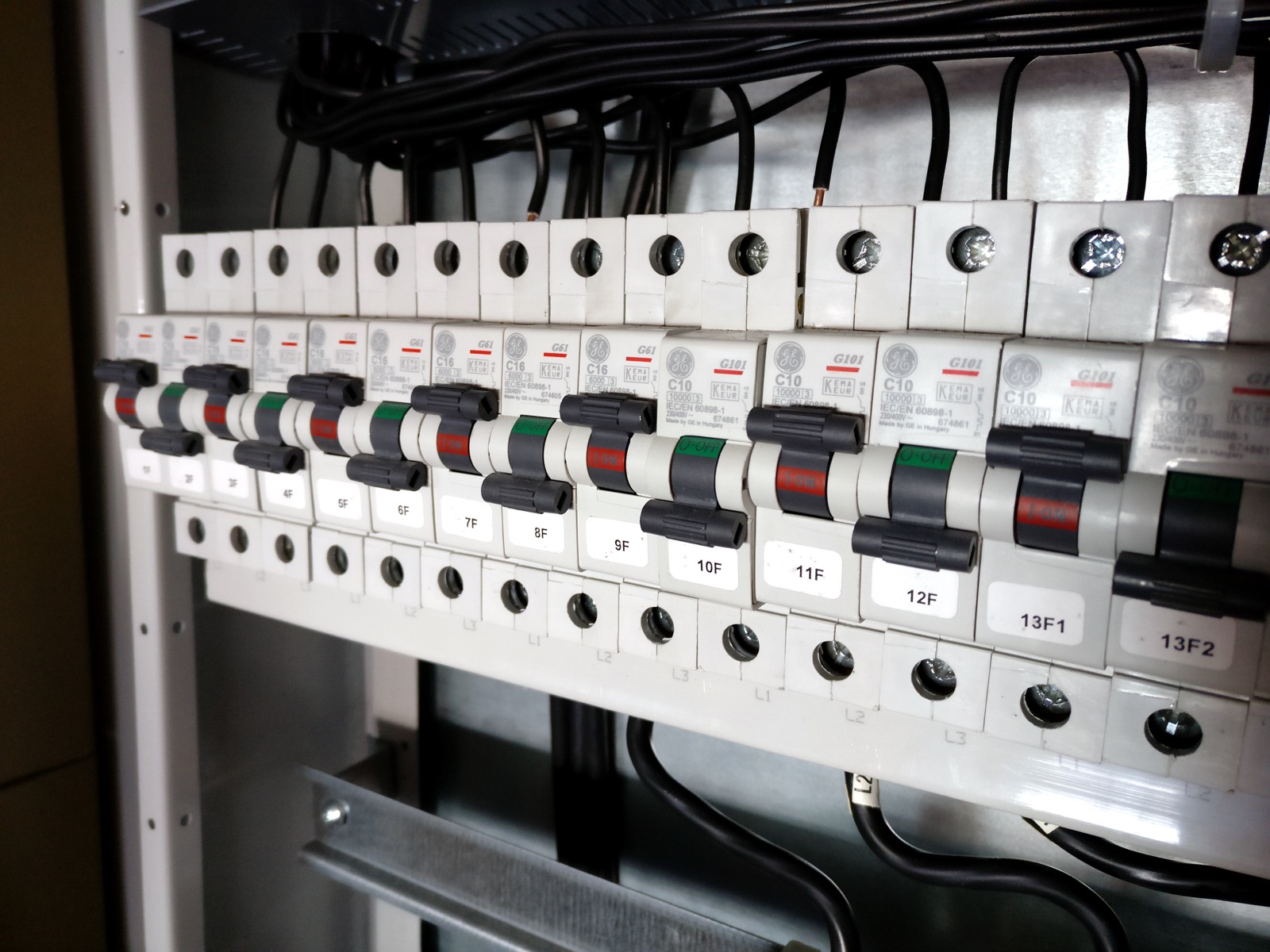

There is no single statutory interval for an Electrical Installation Condition Report (EICR) on commercial premises in the UK. The legal duty is to maintain electrical systems so they do not cause danger, and the IET's Guidance Note 3 recommends maximum initial intervals for periodic inspection, commonly cited as 5 years for offices, shops and most commercial premises and 3 years for industrial premises. The inspector should then recommend the date of the next inspection based on the installation's condition and use.
This guide explains where those intervals come from, how they differ from the rules for rented homes and what to do with the results. It reflects guidance available in October 2026 and is not legal advice.
What does the law actually require?
For workplaces, the key duty comes from the Electricity at Work Regulations 1989, which apply across Great Britain. Regulation 4(2) requires that, as may be necessary to prevent danger, all systems are maintained so as to prevent danger, so far as is reasonably practicable.
The regulations do not set a testing frequency. The Health and Safety Executive's electrical safety FAQs say installations should be tested often enough that there is little chance of deterioration leading to danger. They also advise that any part that has become obviously defective between tests should be de-energised until it is fixed.
In practice, periodic inspection and testing, recorded on an EICR, is the usual way to show that the fixed installation is being maintained. The inspection is carried out against BS 7671, the IET Wiring Regulations.
What intervals does IET Guidance Note 3 recommend?
IET Guidance Note 3 (GN3), Inspection and Testing, includes a table of recommended initial frequencies of inspection. The IET is clear that these are recommendations, not legal requirements.
The intervals most often cited for commercial buildings, as summarised by insurer Aviva's loss prevention standard on electrical inspection and testing (version dated November 2024), are:
- Offices: 5 years
- Shops: 5 years
- Commercial premises: 5 years or on change of occupancy
- Educational establishments: 5 years
- Industrial premises: 3 years
Some locations have much shorter intervals. Electrical Safety First gives 1 year for swimming pools, for example. Premises with special locations, harsh environments, heavy use or public access may need more frequent inspection.
The IET published the 10th edition of GN3 in 2026, updated to BS 7671:2018+A4:2026. The IET lists the recommended initial frequencies of inspection among the updated content, so the figures above, which come from a 2024 summary, may have changed. Confirm the current recommendation for your premises type with your electrical contractor.
Routine checks between inspections
GN3 also recommends routine checks between formal inspections. Aviva's summary lists a 1-year routine check interval for offices, shops, commercial and industrial premises, and 6 months for educational premises. These checks can include confirming earlier defects were fixed, visual checks for damage or overheating and operating RCD test buttons. They do not replace the periodic inspection.
Why might your building need a shorter interval?
The recommended interval is a maximum starting point. The inspector should set the next inspection date on the report, and that date should be followed. Reasons for a shorter interval include:
- An older installation or one with a history of defects.
- Damp, dusty, hot or corrosive conditions.
- Frequent alterations, fit-outs or changes of tenant.
- High footfall or vulnerable occupants.
- Requirements from your insurer, landlord or lease.
An EICR is also sensible when you take on a building, before major refurbishment and after damage such as a flood or fire.
How is this different from rented homes in England?
Private landlords in England do have a fixed interval. The Electrical Safety Standards in the Private Rented Sector (England) Regulations 2020 require the installation to be inspected and tested at intervals of no more than 5 years, or sooner if the last report says so.
According to the government's guidance for landlords, landlords must also give the report to tenants within 28 days, provide it to the local authority within 7 days of a request and complete required remedial or investigative work within 28 days or any shorter period the report specifies. The rules have since been extended to the social rented sector, with transitional arrangements for existing tenancies.
These duties apply to rented homes in England. They do not set the interval for offices, shops or other commercial premises, although mixed-use buildings may need both regimes managed together.
What do C1, C2, C3 and FI mean?
An EICR records observations using classification codes. The IET's inspection and testing FAQs and NICEIC describe them as follows:
- C1: Danger present. There is a risk of injury and immediate remedial action is required. The inspector should make the situation safe where possible and tell the person responsible straight away.
- C2: Potentially dangerous. Urgent remedial action is required.
- C3: Improvement recommended. This does not make the report unsatisfactory, but the item should be considered.
- FI: Further investigation required without delay. Something was found that could reveal a dangerous or potentially dangerous condition and needs investigating.
A report with any C1 or C2 observation is unsatisfactory. Under the IET's guidance, further investigation should be used where it is reasonably expected to reveal a dangerous or potentially dangerous situation, so FI items should be investigated promptly.
What happens after an unsatisfactory report?
For commercial premises, there is no prescribed 28-day deadline as there is for rented homes. However, the duty under the Electricity at Work Regulations means danger must be dealt with. A sensible process is:
- Act on C1 items immediately, isolating the affected circuit or equipment if needed.
- Agree a short timescale for C2 and FI items and record who owns each one.
- Review C3 items and decide whether to plan them into future works.
- Ask the contractor who does the remedial work to provide appropriate certification for it.
- Keep the original report with the remedial records, so anyone reviewing the installation can see how each item was closed.
If the electrical work is part of wider building work in a higher-risk building in England, check whether it needs Building Safety Regulator approval. Our guide to BSR Gateway 2 explains the exemptions.
Next steps
Start with a register of your sites showing the date of the last EICR, the recommended next date, the outcome and any open items. That will show where reports are overdue or remedial work has stalled.
Oracle's EICR testing and electrical services teams can inspect installations, report findings and carry out remedial work. We also provide fire alarm and emergency lighting maintenance, which is often scheduled alongside electrical testing. For planned maintenance more generally, see our article on planned preventative maintenance. To discuss your sites, get in touch with our team.