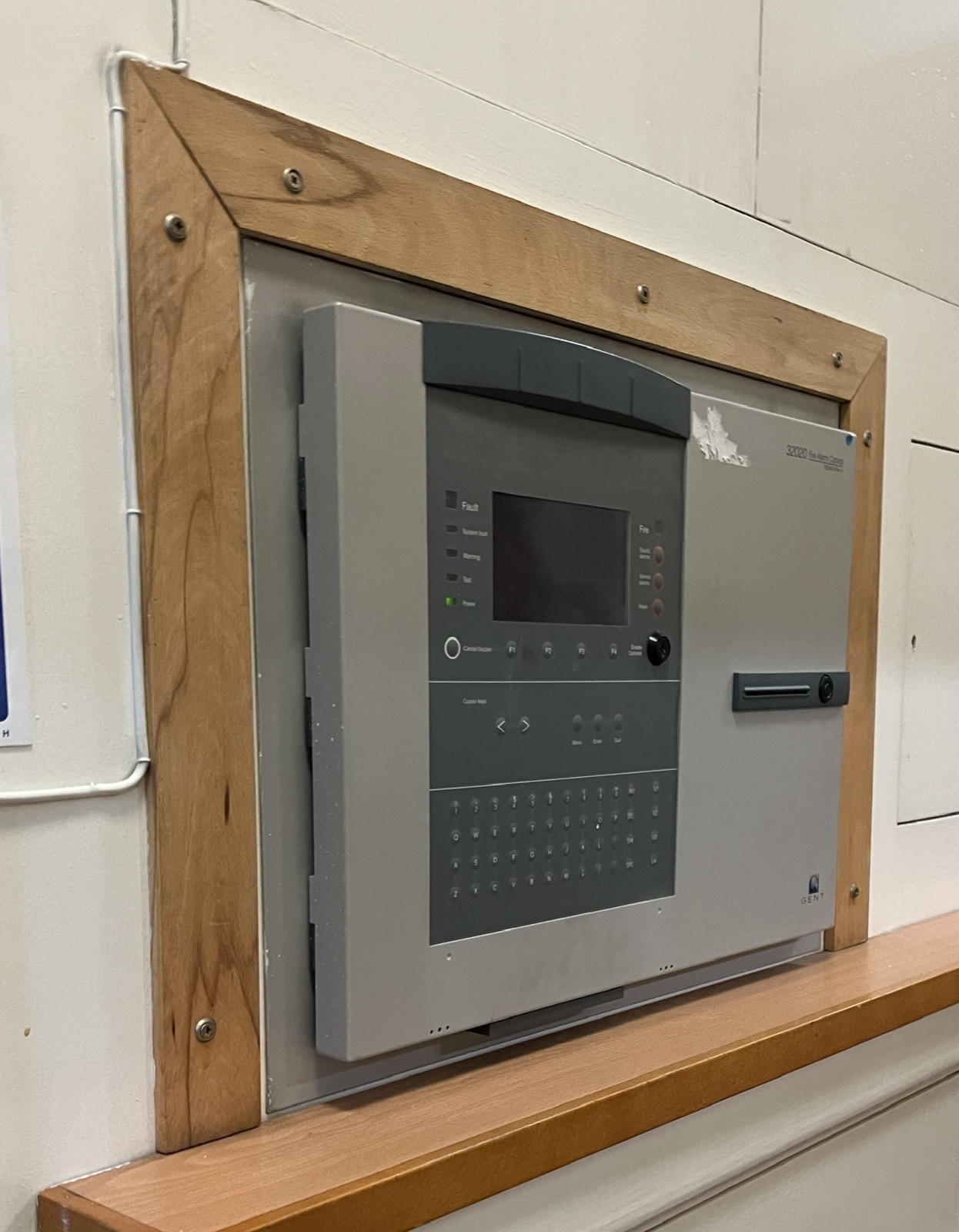

Fire alarm and emergency lighting maintenance means routinely testing, servicing and repairing the systems that warn people of a fire and light their way out. In England and Wales, the responsible person must keep these systems in efficient working order and good repair. Oracle designs, installs and maintains active fire systems in London, including emergency lighting testing to BS 5266, for high-rise residential, student accommodation, data centres, heritage buildings and other managed estates.
Both systems can fail quietly. A detector covered during decorating, a fault left on the panel or an emergency luminaire with a failed battery may go unnoticed until it is needed. Planned maintenance finds those problems first and gives you the records to prove the work has been done.
What fire alarm servicing covers
A service visit is planned around the system design, the logbook and the recommendations in BS 5839-1. Depending on the system, it typically includes:
- Reviewing the logbook, recorded faults and false alarms since the last visit.
- Checking the control and indicating equipment, power supplies and standby batteries.
- Functional testing of detectors and manual call points, in line with the agreed test schedule.
- Checking sounders, visual alarm devices and any interfaces, such as door releases or plant shutdown.
- Checking any connection to an alarm receiving centre, where fitted.
- Recording faults, recommendations and any variations from the standard.
Oracle's maintenance team also inspects PAVA (public address and voice alarm) systems where they are part of the building's fire strategy.
What emergency lighting testing covers
Emergency lighting testing confirms that luminaires and exit signs light when the mains supply fails, and keep working for their rated duration. The routine set out in government guidance includes:
- A monthly function test of each luminaire and sign.
- An annual full discharge test, to confirm batteries last for the rated duration.
- A daily visual check of central controls, where a central battery system is installed.
Each result should be recorded in the logbook, failed lamps or batteries replaced, and any areas where coverage looks inadequate for the escape routes flagged.
What the standards and law say
Under article 17 of the Regulatory Reform (Fire Safety) Order 2005, which applies in England and Wales, the responsible person must ensure fire safety facilities, equipment and devices are subject to a suitable system of maintenance and kept in efficient working order and good repair.
For fire alarms, BS 5839-1:2025 is the code of practice for non-domestic premises. It recommends inspection and servicing every six months. The Fire Industry Association's guide to the 2025 changes explains that a tolerance of one month either side of each six-month date is now recognised. The government's guide for offices and shops also recommends a weekly test of the fire warning system, using a different call point each time.
For emergency lighting, the same government guide describes the daily, monthly and annual tests above and points to BS 5266-1 and BS 5266-8 for detail. It also warns that batteries typically take 24 hours to recharge after a full discharge test, so the test must be timed with care.
British Standards are codes of practice rather than law. However, they are widely used as the benchmark for showing that a system is maintained properly, and your fire risk assessment may refer to them directly.
Testing in occupied buildings
Alarm and lighting tests can disrupt occupants if they are not managed well. Good practice is to:
- Agree test times and notify occupants, security and any alarm receiving centre beforehand.
- Isolate and reinstate zones in a controlled way, so the building is not left unprotected.
- Schedule annual discharge tests for quieter periods, or test in phases.
- Leave the panel clear of faults, or record clearly what remains and why.
What your records should show
Whoever maintains your systems, each visit should leave you with:
- Completed logbook entries and a service record for the fire alarm system.
- Emergency lighting test records, with any failed luminaires identified by location.
- A list of faults and recommendations.
- A record of any variations from the standard, so they can be reviewed against the fire risk assessment.
Oracle designs, installs and maintains active fire systems with a focus on compliance-ready documentation, including BS 5839-1 L1, L2 and L3 fire alarm systems and emergency lighting to BS 5266. That means installation, upgrades and maintenance can sit with one contractor.
When to book
Book fire alarm servicing or emergency lighting testing when:
- Your six-monthly fire alarm service or annual emergency lighting test is due.
- You have taken on a building and the maintenance history is unclear.
- The panel shows recurring faults or the building has frequent false alarms.
- A fit-out or change of layout may have affected detection or escape lighting.
To arrange servicing in London, contact our team with details of the system and your current logbook.