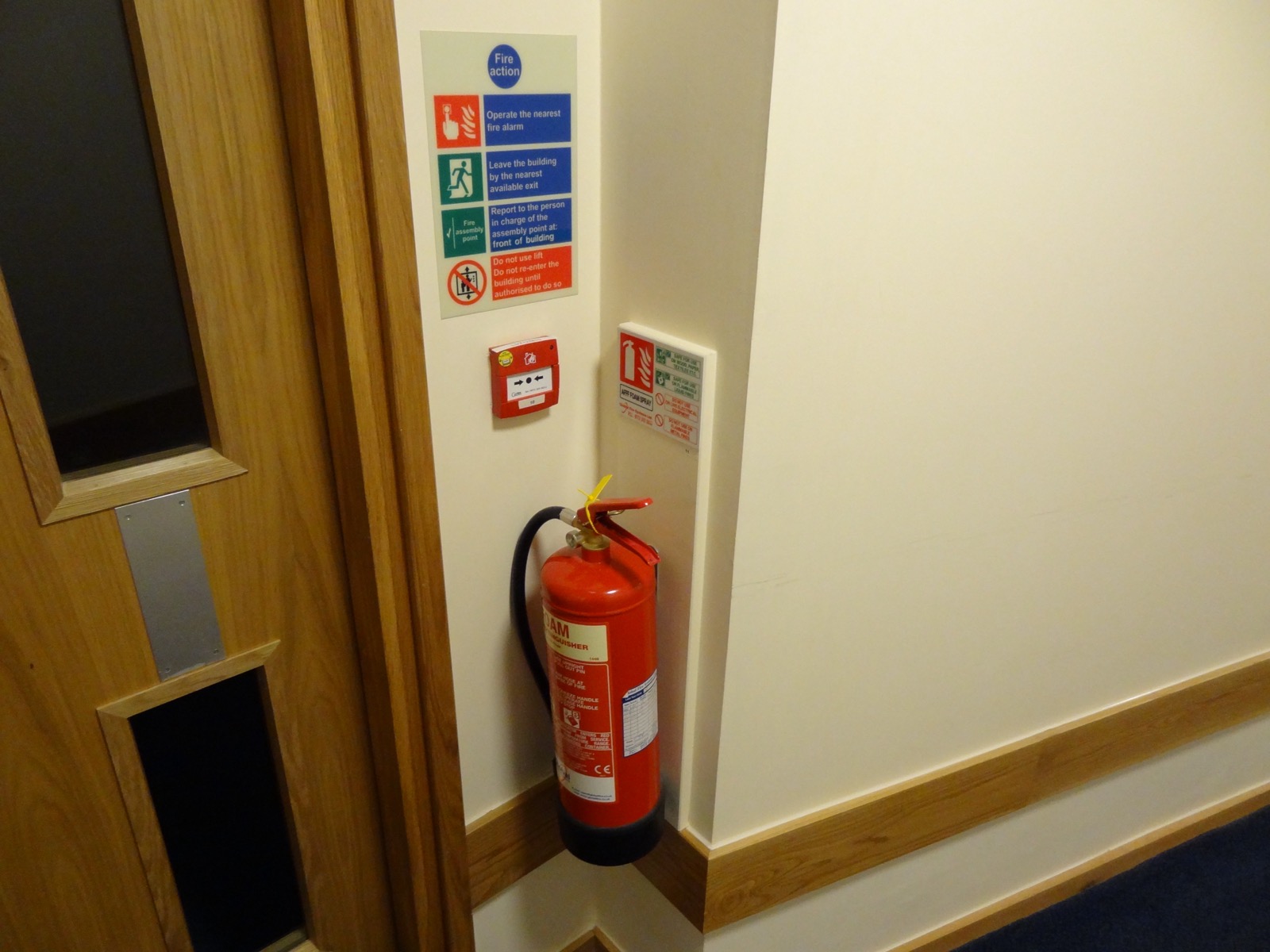

A fire risk assessment is a structured review of how a fire could start in a building, who would be at risk and whether the existing precautions are adequate. In England and Wales, the responsible person for workplaces and the common parts of residential buildings must have one, keep it under review and record it in full. Oracle carries out fire risk assessments in London and delivers many of the remedial works they lead to.
A good assessment is more than a completed form. It should tell you clearly what needs to change, how urgent each item is and who will deal with it.
What a fire risk assessment covers
Every building is different, but a fire risk assessment typically looks at:
- Ignition sources, fuel and how the building is used day to day.
- The people at risk, including anyone who may need help to evacuate.
- Means of escape, including routes, exits, signage and emergency lighting.
- Fire detection and warning systems.
- Compartmentation, fire doors and other passive fire protection, as far as can be seen.
- Firefighting equipment and facilities for the fire and rescue service.
- Management arrangements, including training, testing records and maintenance.
For buildings containing two or more sets of domestic premises, the Fire Safety Act 2021 confirms the assessment must take account of the structure, external walls and flat entrance doors.
What the law says
In England and Wales, article 9 of the Regulatory Reform (Fire Safety) Order 2005 requires the responsible person to make a suitable and sufficient assessment of the risks, and to review it regularly. The government's workplace fire safety guidance sets out the same duty and the need to keep a written record.
Changes made by section 156 of the Building Safety Act 2022 came into force on 1 October 2023. The government's section 156 guidance explains that every responsible person must now:
- Record the completed fire risk assessment in full, including all findings.
- Record the name of any individual or organisation engaged to carry out or review it.
- Take reasonable steps to identify and cooperate with other responsible persons in the building.
- In buildings with two or more sets of domestic premises, share relevant fire safety information with residents.
The same guidance recommends that anyone appointed to carry out the assessment is competent, with sufficient training and experience or knowledge. There is no fixed legal review interval. The assessment must be kept up to date, and reviewed when there is reason to suspect it is no longer valid or after significant changes.
These duties apply in England and Wales. Scotland and Northern Ireland have their own fire safety legislation.
Our approach: PAS 79
Oracle's fire risk assessments follow PAS 79, a recognised, documented methodology that helps make an assessment consistent and easy to audit. BSI now publishes its guidance in two parts. PAS 79-1:2020 is the code of practice for premises other than housing. For blocks of flats and other housing, the relevant BSI code of practice is now BS 9792:2025, which replaced the withdrawn PAS 79-2.
In occupied buildings, access should be agreed in advance so the assessment can be carried out with as little disruption as possible. Where an issue needs closer investigation, such as concealed compartmentation, a good assessment says so and explains the next step rather than guessing.
What you receive
Oracle's fire risk assessments investigate your premises and give clarity on safety hazards. You receive:
- A fire risk assessment carried out to PAS 79.
- An action plan setting out what needs to change.
- Golden thread documentation to support your building records.
Because Oracle also carries out passive fire protection, fire door work, fire alarm and emergency lighting maintenance and electrical testing, many actions do not have to be passed between several contractors.
When to book a fire risk assessment
Book a fire risk assessment when:
- You have taken on responsibility for a building and have no current assessment.
- The building, its layout or its use has changed significantly.
- A fire, near miss or enforcement visit has raised concerns.
- Your existing assessment was recorded before the 2023 changes and may not be recorded in full.
- Your planned review date is approaching.
To discuss a fire risk assessment in London, contact our team with details of the building, its use and any previous assessments.