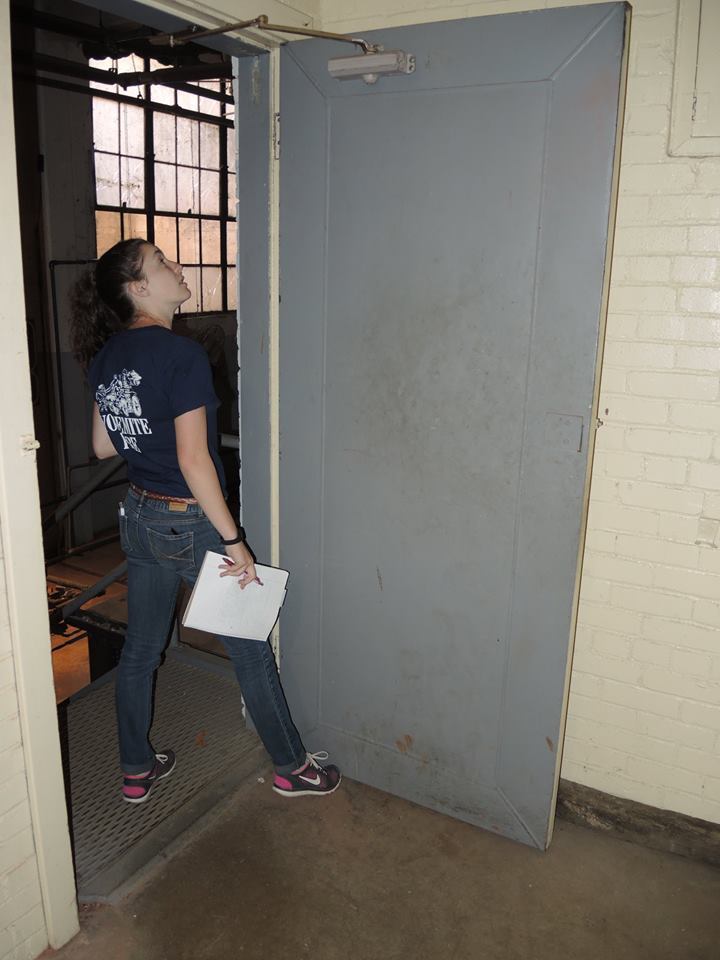

A fire door inspection is a door-by-door check that each fire door will still close, seal and hold back fire and smoke as intended. Oracle carries out fire door inspections and surveys in London for building owners, managing agents and facilities teams who need clear evidence of door condition and a practical plan to fix what is wrong.
Fire doors take daily wear in corridors, stairwells and flat entrances. Closers are disconnected, doors are wedged open, seals are painted over and gaps open up as frames move. A survey records those issues before they become a failure in a fire.
What a fire door survey covers
The agreed scope sets what is included, but a typical fire door survey looks at:
- The door leaf and frame, including damage, alterations and fixings.
- Gaps around the door edges and at the threshold.
- Intumescent strips and smoke seals, where fitted.
- The self-closing device and whether the door closes fully into its frame.
- Hinges, locks, latches and other ironmongery.
- Vision panels and glazing.
- Signage and any hold-open or release devices.
- Evidence of the door's fire rating, such as labels or other markings, where visible.
A useful survey gives every door a location reference and photographs, so your team can find it again and connect later repairs to the original finding. Where something cannot be seen or reached, the report should say so rather than assume it is satisfactory.
What the law says about fire door checks
In England, the Fire Safety (England) Regulations 2022 set specific duties for buildings containing two or more sets of domestic premises. Where the top storey is more than 11 metres above ground level, the responsible person must:
- Check fire doors in communal areas at least every three months.
- Use best endeavours to check flat entrance fire doors at least every 12 months.
The government's fire door guidance explains that these routine checks are simple and basic. Caretakers or managing agents can usually carry them out after suitable instruction. A specialist survey goes further and is useful when you need a reliable baseline, a remedial specification or evidence for an audit.
These intervals are specific to residential buildings in England covered by the regulations. They are not a UK-wide rule. For offices, shops and other workplaces in England and Wales, the Regulatory Reform (Fire Safety) Order 2005 requires fire safety measures to be maintained in efficient working order and good repair. The government's guide for offices and shops suggests a monthly check that fire doors close correctly and that frames and seals are intact.
The Fire Safety Act 2021 also confirmed that flat entrance doors in multi-occupied residential buildings fall within the scope of the fire risk assessment.
Fire door inspections in occupied buildings
Oracle delivers passive fire compliance in occupied buildings with minimal disruption, coordinating access with building management and occupants. When planning a survey in a building that stays in use, it helps to:
- Agree the scope, door list and access plan before the first visit.
- Give residents or occupiers notice where flat entrance doors or private areas are included.
- Keep corridors and escape routes usable while doors are being inspected.
- Make sure any doors that could not be accessed are recorded, with the reason, so they can be picked up later.
Because Oracle also carries out remedial work, surveys and remediation sit with one contractor, with no handoffs between inspection and remediation.
What you receive
Oracle's fire door surveys and inspections cover:
- Compliance audits and condition assessments.
- Remedial schedules setting out the work needed.
- Certification-ready reporting.
- Remedial works, if you want Oracle to carry them out.
Oracle holds certification under the Q-Mark Fire Door Installation Scheme and the Q-Mark Fire Door Maintenance Scheme. We deliver small-scale remedials, such as door fixes, seals and ironmongery, as well as phased FD30 and FD60 door replacement programmes and conservation-compliant upgrades for listed buildings.
When to book a fire door survey
Consider booking a fire door survey in London when:
- You have taken on a building and have no reliable door register.
- Your fire risk assessment has raised actions on fire doors.
- Routine checks keep finding the same faults and you need to understand why.
- Refurbishment or fit-out work may have altered doors, frames or ironmongery.
- You need a baseline before planning a replacement or maintenance programme.
If you are not sure what scope you need, read our guide on how often fire doors should be inspected, or contact our London team to talk through the building and your existing records.