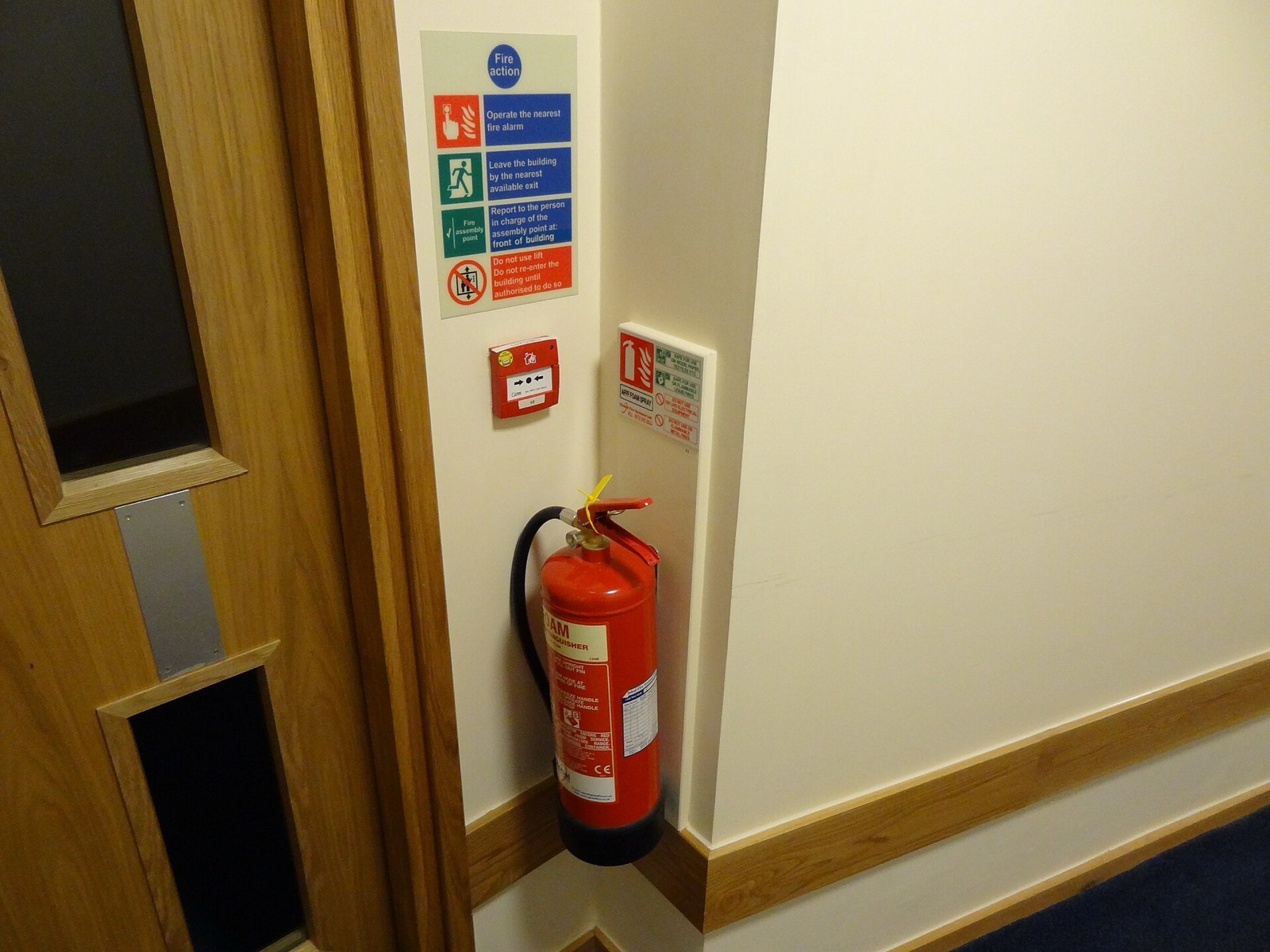
Photo: KRoock74, Fire extinguisher with ID sign, call point and fire action sign, via Wikimedia Commons, CC BY-SA 3.0. Resized. Illustrative only, not an Oracle project.

The Facilities Manager's 2026 Compliance and Maintenance Guide is a free PDF from Oracle FM that brings the main building compliance topics into one place. It is written for people who look after multi-occupied residential and commercial buildings in England and need a structured way to review what is in place, what evidence exists and where the gaps are.
This page explains what the guide covers, who it is for and how to get the most from it. You can request a copy using the form below.
What is inside the guide?
The guide is a 15-page A4 PDF, 2026 edition. It is organised into nine sections:
- The legislative landscape. An overview of the Regulatory Reform (Fire Safety) Order 2005, the changes made by the Fire Safety Act 2021, the Building Safety Act 2022 regime for higher-risk buildings, and the main secondary legislation and standards that sit behind them.
- Passive fire protection and fire doors. What a fire door inspection should look at, and what a compartmentation and fire stopping survey report should contain.
- Active fire protection. Fire alarm maintenance with reference to BS 5839, emergency lighting with reference to BS 5266-1, dry and wet risers, sprinkler systems, and moving from a waking watch to a permanent alarm system.
- Electrical compliance. How EICR observations are classified (C1, C2, C3 and FI) and how inspection frequency differs between statutory requirements and accepted practice for different building types.
- M&E and planned preventative maintenance. The core elements of a PPM programme, including lifts, water hygiene, heating, HVAC and building fabric, plus a simple priority structure for reactive maintenance.
- Projects and remediation. When survey findings stop being routine repairs and need to be managed as a capital programme, including fire door replacement programmes.
- Higher-risk buildings. Safety case, golden thread and Accountable Person responsibilities, and where consultancy support fits.
- Annual compliance checklist. Checklists grouped by fire risk assessment and fire safety, active fire protection, electrical, M&E and building systems, and higher-risk buildings, each with a frequency and the evidence you would expect to hold.
- Commissioning multi-discipline works. An outline of how Oracle FM's service lines fit together under one contractor.
The guide focuses on England. It is general information, not legal advice, and it says so in its disclaimer.
Who is it for?
The guide is most useful if you are:
- A facilities manager or building manager responsible for one or more occupied buildings.
- A managing agent preparing for a compliance review or a handover between suppliers.
- A Responsible Person under the Fire Safety Order, or someone supporting one, who wants a single checklist across fire, electrical and M&E.
- An Accountable Person or Building Safety Manager for a higher-risk building who wants to cross-check routine maintenance evidence against wider building safety duties.
If you manage buildings in Scotland, Wales or Northern Ireland, the structure of the checklist will still help, but the legal framework is different and you should check local requirements.
How to use the guide
The checklist is the practical core of the guide. We suggest working through it in this order:
- Gather what you already hold. Collect the current fire risk assessment, the action plan, fire door and compartmentation records, alarm and emergency lighting logs, the latest EICR and your PPM schedule.
- Work through each checklist section. For every line, note whether the evidence exists, where it is stored, its date and who owns it.
- Mark the gaps. Separate missing evidence from overdue work. A missing certificate and a known defect need different responses.
- Confirm frequencies for your building. The right interval depends on the building type, height, use and your fire risk assessment. Check the primary source before setting a schedule.
- Turn gaps into an owned action list. Give each item an owner, a target date and the evidence that will close it.
Check the primary sources
Legislation and guidance change, and some duties apply only to certain buildings. Before you rely on any specific frequency or threshold, check the current government guidance. As of October 2026, useful starting points include:
- Fire safety in the workplace: fire risk assessments (GOV.UK).
- Fire Safety (England) Regulations 2022: fire door guidance, which sets out the fire door checking duties for blocks of flats with a top storey above 11 metres.
- Building control approval for higher-risk buildings (Building Safety Regulator), if you plan works to a higher-risk building.
How Oracle can help
If the checklist shows gaps, we can help you close them. Our teams carry out fire risk assessments, fire door inspections, fire stopping and compartmentation surveys, EICR testing and fire alarm and emergency lighting maintenance, and deliver the remedial works that follow through our passive fire protection, active fire protection and electrical services.
For higher-risk buildings, see our building safety consultancy and Building Safety Regulator support. To talk through your results, contact our team.
Facilities Manager's 2026 Compliance Pack
Enter your work email, we'll send you a personal download link (valid 14 days). The PDF is not available on the website.
Subscribe to our newsletter
Get the latest insights delivered directly to your inbox.